

How a Storage Tank Gets Made: From Flat Plate to Stamped Nameplate
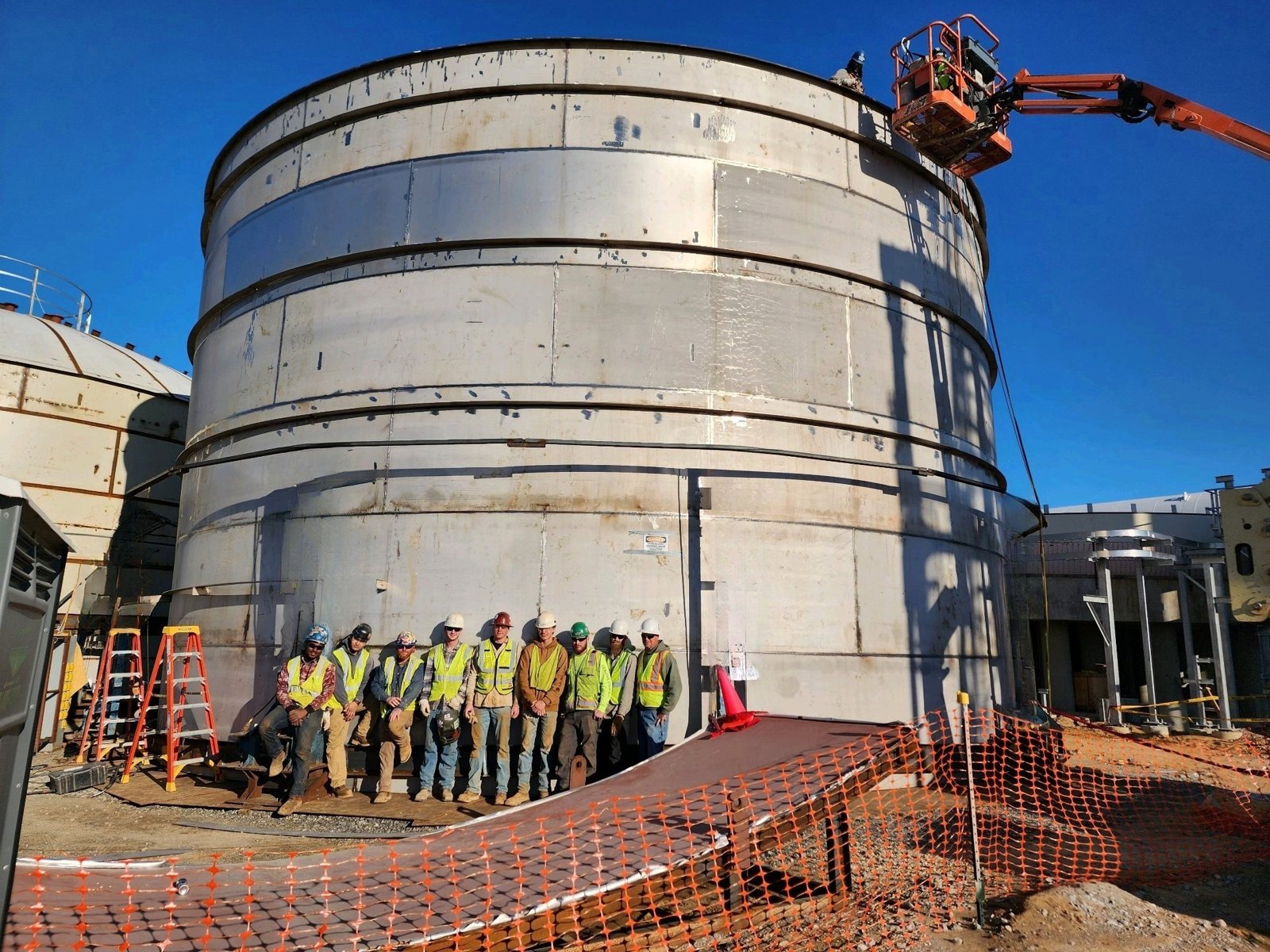
Six steps between an approved drawing and a tank on your site.
October is National Manufacturing Month, and it is a good time to answer a question we hear from newer engineers, project managers, and buyers more often than you might expect: what actually happens between the approved drawing and the tank showing up on site?
The short version is plate, rolls, fit-up, welding, testing, and stamping. Knowing the steps makes it easier to write a good spec, ask the right questions of any fabricator, and understand where lead time really goes.

Material comes in with a paper trail
Every tank starts as flat plate: carbon steel, 304L or 316L stainless, duplex, or a specialty alloy, depending on the service. Before it is cut, each plate is matched to its mill test report, which records the chemistry and mechanical properties of the heat it came from.
That heat number follows the material through the whole job. On code work, this traceability is required. On everything else, it is just good practice.

Cutting and rolling the shell
Plate is cut to size, then run through the plate rolls to take on the radius of the shell. Our shop runs a 10 ft plate roll and an automated seam roller across three shifts.
This step looks simple and is easy to get wrong. A section that comes off the roll slightly out of round becomes a fit-up problem, and fit-up problems become weld problems. Accuracy has to be built in at the start.

Fit-up and welding
Rolled sections are stacked, aligned, and welded course by course. Tight, consistent joint gaps produce sound welds. Poor fit-up gets covered with extra weld metal, which means more heat, more distortion, and more risk.
Every Gilbert welder and weld procedure is qualified to ASME Section IX, using GTAW, GMAW and pulse, FCAW, or SMAW to fit the joint. On stainless, heat input is managed closely to protect corrosion resistance.
Read: Understanding ASME Section VIII and Its Role in Vessel Design

Heads, nozzles, manways, and internals
Once the shell is round and plumb, it becomes a working vessel. Depending on the service, that can include:
- Heat transfer jackets or internal coils
- Agitator mounts and baffles
- Ladders, platforms, and handrail
- Legs, lugs, saddles, or skirts
- Finishes from mill finish down to 10 Ra polished
Testing before anything ships
Depending on the code and service, testing can include:
- Hydrostatic or pneumatic pressure testing
- Radiography or ultrasonic testing on welds
- Dye penetrant on critical joints
- A dimensional check against the approved drawing
On pressure vessels, test pressure and hold time come straight from the code. Third-party inspectors are always welcome at Gilbert.
Finding a leak in the shop costs an afternoon. Finding it after startup costs everyone far more.

The nameplate and the data report
An ASME nameplate records the code the vessel was built to, its maximum allowable working pressure and temperature, minimum design metal temperature, serial number, and year built. The ASME stamp means it was built and inspected under an accredited quality program.
Behind it sits the data report and full paperwork trail: material test reports, weld procedures, welder qualifications, and test records.
Read: Importance of API 650 Standards in Storage Tank Fabrication
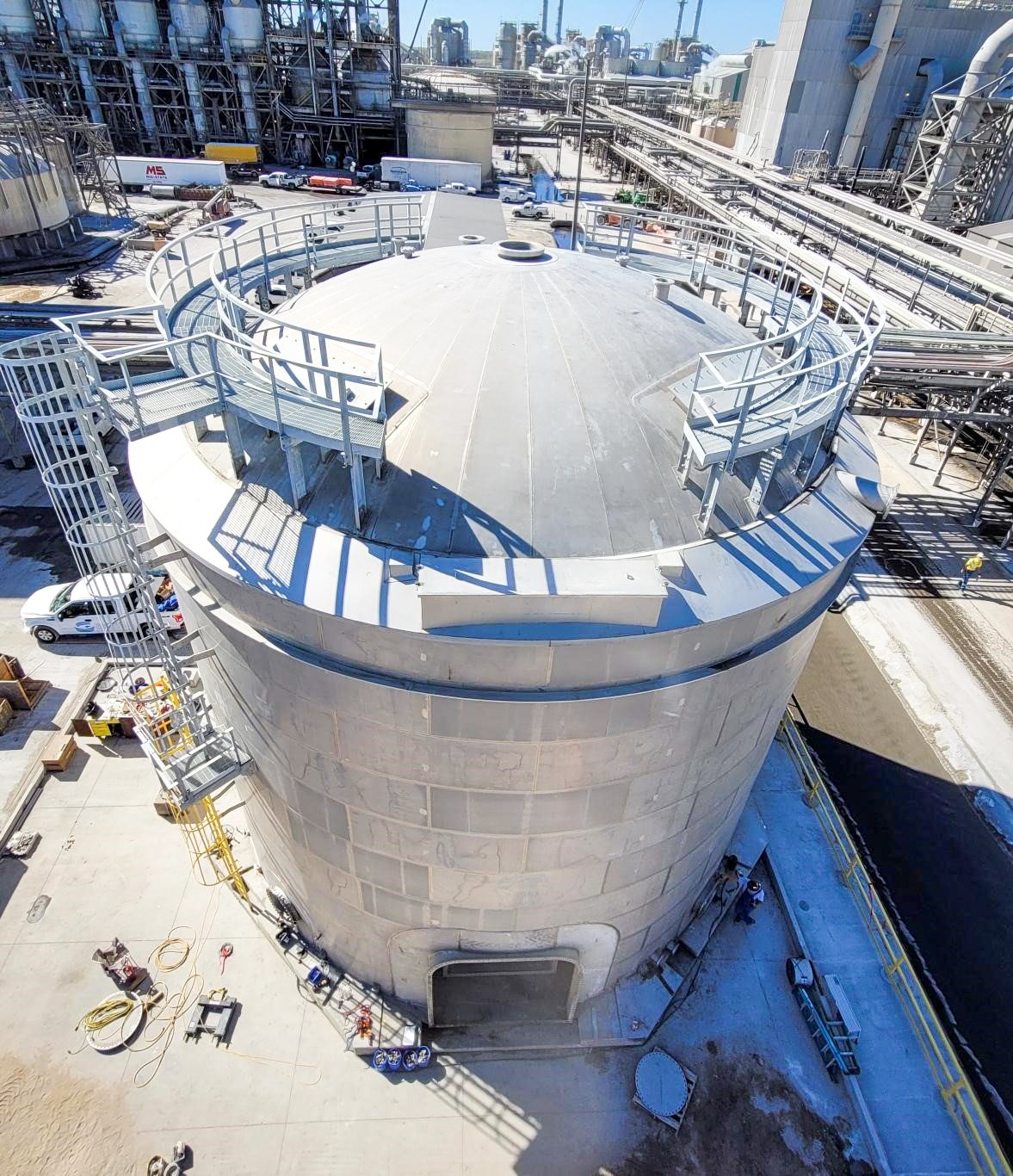
When the tank is too big to ship
The same steps happen on site. Plate is prefabricated in our shop, then our field crews erect, weld, and test the tank on its foundation. The standards do not change. The setting does.
Shop or field usually comes down to size, freight, site access, and schedule. When it is close, we are happy to quote it both ways.
Planning a tank or vessel project?
Every step above depends on decisions made before fabrication starts. The earlier material, code, finish, and nozzle layout are settled, the more predictable the schedule. We are always happy to be a resource.