

Remembering the Frisco Railway: Sparta’s Link to Missouri’s Industrial Past
Nestled in the rolling hills of Christian County, Sparta, Missouri, stands as a living testament to the transformative power of the railroad era. The arrival of the St. Louis–San Francisco Railway—affectionately known as the Frisco—ushered in a period of economic growth, industrial opportunity, and community development that forever altered the trajectory of this small Ozarks town.
Today, as remnants of the old rail bed still trace their way through the countryside, Sparta’s connection to Missouri’s industrial past remains a source of local pride and historical significance.
The Frisco Railway: A Brief Overview
The St. Louis–San Francisco Railway, commonly called the Frisco, was incorporated in Missouri in 1876. It quickly became a dominant force in the Midwest and South Central United States, with its operational heart in Springfield, Missouri.
The Frisco’s network extended through Missouri, Arkansas, Oklahoma, and Kansas, connecting rural communities to major urban centers and national markets. Its influence reached deep into the Ozarks, where it played a pivotal role in the development of towns like Sparta, Ozark, Chadwick, and Oldfield.
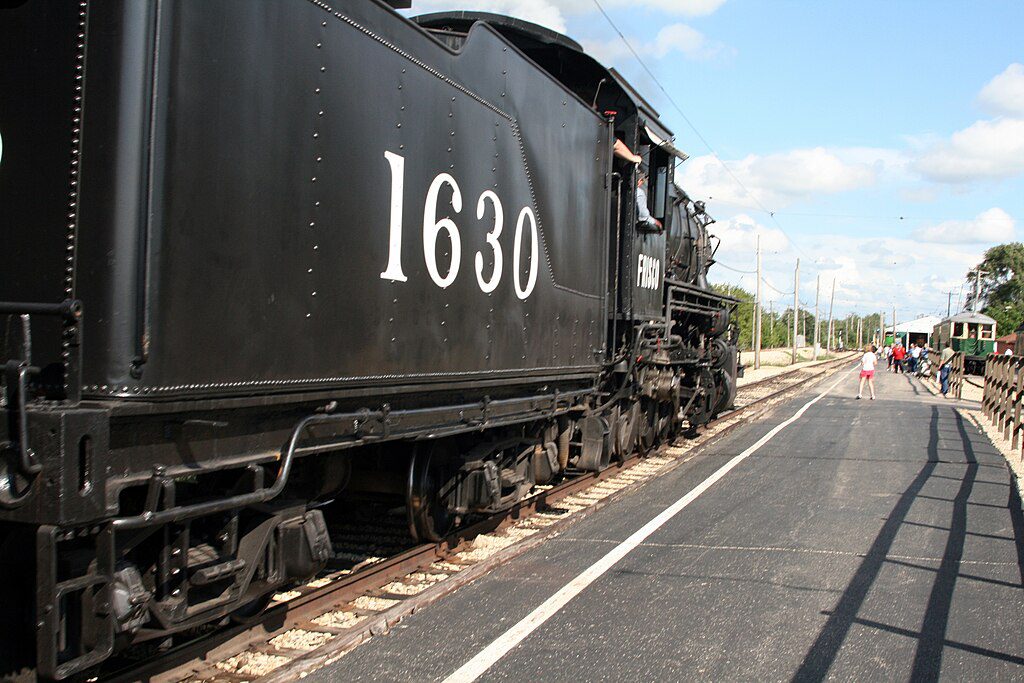
Photo Courtesy of: anjanettew, CC BY-SA 2.0, via Wikimedia Commons
The Chadwick Branch: Sparta’s Lifeline
In the early 1880s, the Frisco expanded its reach with the construction of the Chadwick Branch, also known as the Chadwick Flyer. This line began as the White River Branch of the Springfield and Southern Railway Company, with the section from Springfield to Ozark completed in 1882.
By 1883, the rails stretched from Ozark to Chadwick, passing directly through Sparta. The Chadwick Branch was more than just a transportation corridor; it was a catalyst for local industry and commerce.
Key stops along the Chadwick Branch:
- Springfield: The operational center for the Frisco, home to major repair shops and administrative offices.
- Ozark: A vital shipping point and community hub.
- Sparta: Emerged as a shipping point for lumber and railroad ties, supporting local sawmills and agriculture.
- Chadwick: The end of the line, featuring a roundhouse for turning engines and a depot that later became a community center.
Economic Impact: Fueling Local Industry
The arrival of the Frisco Railway transformed Sparta from a quiet rural settlement into a bustling shipping point. The town’s strategic location along the Chadwick Branch allowed local businesses to transport lumber, railroad ties, and farm produce to distant markets.
The Hobart-Lee Tie & Timber Company, one of the largest businesses in southwest Missouri during the late 19th century, relied heavily on the Frisco for shipping its products. The railway also brought in goods and materials that supported local merchants and craftsmen, fostering a vibrant commercial ecosystem.
Employment and Community Growth
The Frisco was a major employer in the region, providing jobs for tradespeople, office workers, depot staff, and train crews. The Chadwick Flyer, in particular, was known for its friendly crew and reliable service. The presence of the railway attracted new residents, spurred the construction of homes and businesses, and contributed to the overall growth of Sparta and neighboring towns.
The Decline and Legacy of the Frisco in Sparta
By the early 20th century, changes in transportation and the depletion of local timber resources began to erode the economic foundation that had supported the Chadwick Branch. The Great Depression further diminished rail traffic, and by 1934, the Frisco abandoned the line from Ozark to Chadwick. Despite the decline, Sparta endured, while other towns along the route faded into obscurity.
Today, traces of the abandoned rail bed can still be seen along Missouri 125 south of Sparta. The legacy of the Frisco lives on in the community’s collective memory, celebrated through local history initiatives and the preservation of historical sites.
The Frisco’s Broader Influence on Missouri’s Industrial Landscape
The story of the Frisco Railway is inseparable from the broader narrative of Missouri’s industrialization. The railroad provided a vital link between rural communities and the nation’s industrial centers, enabling the flow of raw materials, manufactured goods, and people. The Frisco’s operational center in Springfield made it a key player in the region’s economic development, supporting industries ranging from timber and agriculture to manufacturing and retail.
Related entities and lasting connections:
- Burlington Northern Railroad: The Frisco merged with Burlington Northern in 1980, marking the end of an era but ensuring the continued relevance of its routes.
- Springfield, Missouri: Served as the headquarters and operational hub for the Frisco, influencing the city’s growth and industrial profile.
- Local Sawmills and Agriculture: Benefited directly from the shipping opportunities provided by the railway.
A Community Forged by the Rails
The iron rails may have faded into history, but their impact endures in the spirit of Sparta, MO—a community forever shaped by its place along the Frisco Railway. The echoes of steam engines and the bustle of rail workers still linger in local memory, inspiring pride in a heritage built on innovation, resilience, and hard work. Even as the physical tracks have disappeared, the legacy of the Frisco lives on through local landmarks, family stories, and the enduring sense of connection that binds Sparta’s residents to their industrious past.
Today, Sparta honors its railroad roots through community events, historical preservation efforts, and educational programs that keep the story of the Frisco alive for new generations. The town’s landscape, dotted with subtle reminders of the old rail line, stands as a tribute to the transformative power of industry and transportation.
Read this next: The Sparta R-III School District’s Impact on Local Workforce Growth